
Friday, August 26, 2011


Tuesday, August 23, 2011
Pizza

Food | Pizza | Pizza is a dish of Italian origin,made with an oven-baked,flat,generally round bread that is often covered with tomatoes or a tomato-based sauce and mozzarella cheese.Other toppings are added according to region,culture,or personal preferenceOriginating as a part of Italian cuisine,the dish has become popular in many different parts of the world,particularly the UnitedStates,where numerous varieties have been developed, pizza restaurant chains have flourished,and pizza has become a home delivery item as well as being available as a frozen food ready to bake at home.

Today, pizza is a symbol of several cultures: Italians, particularly from Naples, are proud of authentic pizza made with local ingredients and following strict guidelines for preparation. In the United States, pizza has iconic status as a typical American food, quickly prepared and readily available, and enjoyed by people of all ages at social occasions as well as family meals. The different styles, from places such as New York City and Chicago, reflect the diversity of American culture. Countries throughout the world have adopted pizza as a favorite food, adding their own variations to make this dish their own.

Delicious and relatively nutritious, particularly when topped with fresh vegetables, pizza is an example of human creativity. Items available to the general public are combined to make something that satisfies people's needs. Its adaptability reflects the endless diversity of human life and culture, which then acts as a never-ending source of happiness.
Pizza consists of a flattened disk of bread dough topped with olive oil, tomatoes, and mozzarella cheese (and in its variations other toppings),baked quickly,sliced into segments,and served hot.

The bottom base of the pizza(called the“crust”in the UnitedStates andCanada)may vary widely according to style:thin as in hand-tossed pizza or Roman pizza,thick as in pan pizza or Chicago-style pizza.It is traditionally plain, but may also be seasoned with butter,garlic,or herbs, or stuffed with cheese.
Monday, August 22, 2011
sneak appeal...

sneakers paired with a girly frock of your choice... i'm diggin'. in fact, i've got the perfect pair of metallic gold high-top chucks waiting to be dressed up instead of down.
Hamburger

Hamburger | Food | the hamburger, calories hamburger, hamburger patty, hamburger buns, grill hamburger, homemade hamburger, hamburger steak, hamburger casserole -A hamburger(also known as simply a burger)is a sandwich consisting of a cooked patty of ground meat(usually beef, but occasionally pork or a combination of meats)usually placed inside a sliced bread roll.Hamburgers are often served with lettuce,bacon, tomato,onion,pickles,cheese and condiments such as mustard,mayonnaise,ketchup and relish.The hamburger has attained widespread popularity and has proliferated worldwide.
The hamburger most likely first appeared in the19th or early 20thcenturies.The modern hamburger was a product of the culinary needs of a society that was rapidly changing due to industrialization,and therefore,people had less time to prepare as well as to consume meals.

Americans contend that they were the first to combine two slices of bread and a steak of ground beef into a"hamburger sandwich".Part of the controversy over the origin of the hamburger is because the two basic ingredients,bread and beef,were prepared and consumed separately for many years before their combination.Shortly after its creation,the hamburger was prepared with all of the now typically characteristic trimmings,including onions,lettuce,and sliced pickles.
The term hamburger or burger can also be applied to the meat patty on its own,especially in theUK where the term"patty"is rarely used,although the term"hamburger"is rarely used in theCommonwealth countries unless referring to a menu item of anAmerican restaurant.

The term hamburger originally derives from Hamburg,Germany'ssecond largest city,from where many emigrated to America.In High German,Burg means fortified settlement or fortified refuge;and is a widespread component of placenames.Hamburger can be a descriptive noun in German,referring to someone from Hamburg or an adjective describing something from Hamburg.Similarly,frankfurter and wiener,names for other meat-based foods,are also used in German as descriptive nouns for people and as adjectives for things from the cities of Frankfurt and Wien(Vienna),respectively.The term"burger"is associated with many different types of sandwiches similar to a hamburger,using different meats,such as a buffalo burger,turkey burger,elk burger,salmon burger,or even a veggie burger.
During the20th century,there were various controversies,including a nutritional controversy in the late1990s.The burger is now readily identified with the UnitedStates,and a particular style of cuisine,namely fast food. Along with fried chicken and apple pie, the hamburger has become a culinary icon in the United States.

The hamburger'sinternational popularity demonstrates the larger globalization of food that has also been witnessed in the rise in the global popularity of other national dishes,including theTurkish döner kebab,the Italian pizza,and Japanese sushi.The hamburger has spread from continent to continent perhaps because,in part, it is easy to understand in different culinary cultures.This global culinary culture has been produced,in part,by the concept of selling processed food.This idea was first imagined in the1920s by the White Castle restaurant chain and its visionary EdgarWaldo"Billy"Ingram,and was perfected by McDonald's and Ray Kroc in the1940s.This global expansion has provided comparative economics such as the Big Mac Index,which allows for the comparison of the purchasing power of different countries where the Big Mac hamburger is sold.
Tags: most expensive hamburger, hamburger toppings, hamburger patties sacramento, hamburger in spanish, hamburger catering, hamburger habit, hamburger bun recipe, hamburger franchises, hamburger buns recipe, hamburger packaging, hamburger franchise, hamburger marinade, hamburger seasoning, hamburger bags
Saturday, August 20, 2011
Dairy

Food Science | Dairy | the dairy, what is dairy, dairy milk, dairy free, dairy farm - Dairy is defined as a building, room, or establishment for the storage, processing, and distribution of milk and milk products. A dairy is a building used for the harvesting of animal milk - mostly from cows or goats, but also from buffalo, sheep, horses or camels - for human consumption. A dairy is typically located on a dedicated dairy farm or section of a multi-purpose farm that is concerned with the harvesting of milk.
The terminology of diary varies by country. For example, the United States is a farm building where milk is harvested often called a living room. In New Zealand such a building is historically known as the milking shed - but in recent years have seen a gradual change to convene such a construction, a dairy farm.

In some countries, especially those with small numbers of animals being milked, as well as harvesting the milk from an animal, the dairy may also process the milk into butter, cheese and yoghurt, for example. This is a traditional method of producing specialist milk products, especially in Europe. In the United States a dairy can also be a place that processes, distributes and sells dairy products, or a room, building or establishment where milk is stored and processed into milk products, such as butter or cheese. In New Zealand English the singular use of the word dairy almost exclusively refers to the corner convenience store, or superette. This usage is historical as such stores were a common place for the public to buy milk products.
As an attributive, the word dairy refers to milk-based products, derivatives and processes, and the animals and workers involved in their production: for example dairy cattle, dairy goat. A dairy farm produces milk and a dairy factory processes it into a variety of dairy products. These establishments constitute the dairy industry, a component of the food industry.
Milk producing animals have been domesticated for thousands of years. Initially, they were part of the subsistence farming that nomads engaged in. As the community moved about the country, their animals accompanied them. Protecting and feeding the animals were a big part of the symbiotic relationship between the animals and the herders.

In the more recent past, people in agricultural societies owned dairy animals that they milked for domestic and local (village) consumption, a typical example of a cottage industry. The animals might serve multiple purposes (for example, as a draught animal for pulling a plough as a youngster, and at the end of its useful life as meat). In this case the animals were normally milked by hand and the herd size was quite small, so that all of the animals could be milked in less than an hour—about 10 per milker. These tasks were performed by a dairymaid (dairywoman) or dairyman. The word dairy harkens back to Middle English dayerie, deyerie, from deye (female servant or dairymaid) and further back to Old English dæge (kneader of bread).
With industrialisation and urbanisation, the supply of milk became a commercial industry, with specialised breeds of cattle being developed for dairy, as distinct from beef or draught animals. Initially, more people were employed as milkers, but it soon turned to mechanisation with machines designed to do the milking.
Historically, the milking and the processing took place close together in space and time: on a dairy farm. People milked the animals by hand; on farms where only small numbers are kept, hand-milking may still be practiced. Hand-milking is accomplished by grasping the teats (often pronounced tit or tits) in the hand and expressing milk either by squeezing the fingers progressively, from the udder end to the tip, or by squeezing the teat between thumb and index finger, then moving the hand downward from udder towards the end of the teat. The action of the hand or fingers is designed to close off the milk duct at the udder (upper) end and, by the movement of the fingers, close the duct progressively to the tip to express the trapped milk. Each half or quarter of the udder is emptied one milk-duct capacity at a time.
The stripping action is repeated, using both hands for speed. Both methods result in the milk that was trapped in the milk duct being squirted out the end into a bucket that is supported between the knees (or rests on the ground) of the milker, who usually sits on a low stool.

Traditionally the cow, or cows, would stand in the field or paddock while being milked. Young stock, heifers, would have to be trained to remain still to be milked. In many countries, the cows were tethered to a post and milked. The problem with this method is that it relies on quiet, tractable beasts, because the hind end of the cow is not restrained.
In 1937, it was found that bovine somatotropin (bST or bovine growth hormone) would increase the yield of milk. Monsanto Company developed a synthetic (recombinant) version of this hormone (rBST). In February 1994, rBST was approved by the Food and Drug Administration (FDA) for use in the U.S. It has become common in the U.S., but not elsewhere, to inject it into milch kine dairy cows to increase their production by up to 15%.
However, there are claims that this practice may have negative effects on the animals themselves. Scientific Commission of the European Union has been asked to report on the incidence of mastitis and other disorders of dairy cows and other aspects of the welfare of dairy cows. The opinion of the Commission subsequently adopted by the European Union, said that the use of rBST in dairy cows have health problems, including foot problems, mastitis and injection site reactions, it seems, is the welfare animals and caused reproductive disorders. The report found that on the basis of health and welfare of the animals, rBST should not be used. Ministry of Health Canada banned the sale of rBST in 1999, recommendations to the committee was that, even if it is a significant health risk to humans, the drug presented a threat to animal health, and therefore could not be sold in Canada.
Tags: dairy, milk dairy, farm and dairy, farm dairy, about dairy farming, lactose free dairy, dairy farmers, non dairy, dairy allergy, allergy to dairy, no dairy, dairy allergies, dairy land
Friday, August 19, 2011
tequila love... it takes your breath away

the latest of random facts came to me this past weekend at a post-outsidelands party hosted by patron.
needless to say, i was in tequila heaven and made sure i did my research on the newest funnest ways to mix up tequila based bevvies.
while in line for the restroom i started chattin' with two girls and out of the blue one girl goes, "do you know why tequila gives you that body shudder when you take a shot?" and in unison the other girl and i say, "no, why???"
well... it turns out that tequila and oxygen don't really like each other, so whether you're shooting or sipping your tequila, you're supposed to take a deep breath and then exxxxxxxxxxhale out all the air to allow the true essence of its deliciousness to take over your tastebuds.
so... there, while in line for the bathroom, we put her fact to the test and YES, there is a big difference. Tequila's sweeter, woodsy, silkier sides shows and leaves you smiling, with no body shudders and no need to have a lime chaser. good to know, right?
and... for my fellow tequila lover's, DO be sure to check out patron's XO cafe. it's their coffee liqueur made from tequila and it is deeeeeeeeeeeelicious. rest assured it won't take the place of my morning latte, but it will most definitely be mixed into my cocktail arsenal!
breath out and enjoy.
Tuesday, August 16, 2011
Tomato
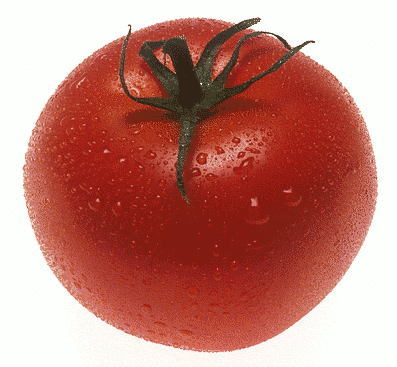
Agriculture | Tomato | tomato plants, tomato planting, tomato pasta sauce, tomato seed, tomato sauce recipes, growing tomato, seeds tomato, tomato calories, tomato growing, tomato plant - Tomato is a delicious, nutritious fruit, more widely known as a vegetable. Botanically, a tomato (Solanum lycopersicum) is the ovary of a flowering plant, therefore it is a fruit, or, more specifically, a berry. However, since it’s not as sweet as other fruits and is most often served in salads or as a main dish - most people refer to it as a vegetable.
 |
| Tomato Plant |
Approximately 130 million tons of tomatoes are produced in the world today with China being the largest producer, followed by the United States and Turkey. Tomato plants are also one of the most common home garden plants found in the U.S. There are many different varieties of tomato plants and most produce red fruit, but there are also tomato plants that produce yellow, orange, pink, purple, green and white fruit. Tomato plants vary in size from small cherry tomatoes to elongated plum tomatoes. Heirloom tomatoes are also becoming increasingly popular among home gardeners and organic producers. Heirloom tomatoes tend to be more disease resistant and produce very tasty, interesting fruits. Tomatoes are the state vegetable of New Jersey, and in Arkansas, it is both the state fruit and state vegetable. In the state of Ohio, tomato juice has been the official beverage since 1965.
 |
| Cherry Tomato |
Tomatoes canbe easilygrown from seeds,but to save time and energy,most home gardeners buy tomato plants or seedlings from nurseries and garden centers.Most tomato seeds that arepurchased by gardeners are for hard to find heirloom varieties. Tomato seeds canbe found ingarden catalogs andcan also be purchased online. Growing tomatoes is enjoyable and rewarding and doesn’t take a lot of space-they can even be grown in containers on patios or balconies.The main thing to remember about growing tomatoes is they need a lot of sunshine and a lot of water with good drainage.The tomato has a multitude of culinary uses and its’ high acidic content makes it very popular for canning. Joseph Campbell mass produced the first tomato soup in 1897, although the first recipe is credited to Maria Parloa for her tomato chowder in the 1872 book,The Appledore Cook Book.Today, tomato recipes number in the hundreds.You can find tomato recipes for everything from tomato marmalade to fried green tomatoes.With just a few basic tips and the proper steps,you can grow tomatoes that will produce luscious fruit that is both tasty and promotes good health.
 |
| Heirloom Tomato |
Tomatoes are high in Vitamin A and C and arenaturally low in calories.They are also an excellent source of lycopene, which is the pigment that makes tomatoes red and has been linked to the prevention of many types of cancer. Lycopene is an antioxidant which fights free radicals that can interfere with normal cell growth and activity. These free radicals are what can potentially lead to cancer, heart disease and premature aging.The best sources of lycopene are found in processed tomato products, such as ketchup and tomato products.
Tags: tomato vpn, tomato health benefits, tomato wrt, tomato router, tomato plant pests, tomato seed germination, tomato packaging, tomato trellis designs, linksys tomato, tomato linksys, tomato usb, tomato watering system, organic tomato juice, tomato throwing festival, tomato head, organic tomato seeds, tomato diet, potted tomato plants, tomato nutrition, tomato concasse
Subscribe to:
Posts (Atom)