|
| Margarine in a tub |
Margarine (pronounced /ˈmɑrdʒərɨn/, /ˈmɑrgərɨn/, /ˈmɑrdʒrɨn/, or /ˈmɑrdʒəriːn/), as a generic term, can indicate any of a wide range of butter substitutes. In many parts of the world, the market share of margarine and spreads has overtaken that of butter. Margarine is an ingredient in the preparation of many foods and, in recipes and colloquially, is sometimes called oleo, short foroleomargarine.
Margarine naturally appears white, or almost white, and by forbidding the addition of artificial coloring agents, legislators in some jurisdictions found that they could protect their dairy industries by discouraging the consumption of margarine. Bans on adding color became commonplace in the U.S., Australasia and Canada and, in some cases, those bans endured for almost 100 years. It did not become legal to sell colored margarine in Australia, for example, until the 1960s.
History
Margarine originated with the discovery by Michel Eugène Chevreul in 1813 of margaric acid (itself named after the pearly deposits of the fatty acid from Greek μαργαρίς, -ρῖτης or μάργαρον (margarís, -îtēs / márgaron), meaning pearl-oyster or pearl). Scientists at the time regarded margaric acid, like oleic acid and stearic acid, as one of the three fatty acidswhich, in combination, formed most animal fats. In 1853, the German structural chemist, Wilhelm Heinrich Heintz, analyzed margaric acid as simply a combination of stearic acid and of the previously unknown palmitic acid.
Margarine in a tub
In 1869, Emperor Louis Napoleon III of France offered a prize to anyone who could make a satisfactory substitute for butter, suitable for use by the armed forces and the lower classes. French chemist Hippolyte Mège-Mouriès invented a substance he called oleomargarine, the name of which became shortened to the trade name "margarine". Mège-Mouriés patented the concept in 1869 and expanded his initial manufacturing operation from France but had little commercial success. In 1871, he sold the patent to the Dutch company Jurgens, now part of Unilever.
United States
As early as 1877, the first United States (U.S.) states had passed laws to restrict the sale and labeling of margarine. By the mid-1880s, the U.S. federal government had introduced a tax of two cents per pound, and manufacturers needed an expensive license to make or sell the product. Individual states began to require the clear labeling of margarine. The color bans, drafted by the butter lobby, began in the dairy states of New York and New Jersey. In several states, legislatures enacted laws to require margarine manufacturers to add pink colorings to make the product look unpalatable, but the Supreme Court struck down New Hampshire's law and overruled these measures.
By the start of the 20th century, eight out of ten Americans could not buy yellow margarine, and those that could had to pay a hefty tax on it. Bootleg colored margarine became common, and manufacturers began to supply food-coloring capsules so that the consumer could knead the yellow color into margarine before serving it. Nevertheless, the regulations and taxes had a significant effect: the 1902 restrictions on margarine color, for example, cut annual U.S. consumption from 120 million to 48 million pounds (60,000 to 24,000 tons). However, by the end of the 1910s, it had become more popular than ever.
With the coming of World War I, margarine consumption increased enormously, even in unscathed regions like the U.S. In the countries closest to the fighting, dairy products became almost unobtainable and were strictly rationed. The United Kingdom, for example, depended on imported butter from Australia and New Zealand, and the risk of submarine attack meant that little arrived.
The long-running rent-seeking battle between the margarine and dairy lobbies continued: In the U.S., the Great Depression brought a renewed wave of pro-dairy legislation; the Second World War, a swing back to margarine. Post-war, the margarine lobby gained power and, little by little, the main margarine restrictions were lifted, the most recent states to do so beingMinnesota in 1963 and Wisconsin in 1967. Lois Dowdle Cobb (1889-1987) of Atlanta, Georgia, wife of the agricultural publisher Cully Cobb, led the move in the United States to lift the restrictions on margarine. Some unenforced laws remain on the books.
Canada
In Canada, margarine was banned from 1886 until 1948 though this ban was temporarily lifted from 1917 until 1923 due to dairy shortages. Nevertheless, bootleg margarine was produced in the neighboring British colony of Newfoundland from whale, seal and
fish oil by the Newfoundland Butter Company (which, in fact, produced only margarine) and was smuggled to Canada where it was widely sold for half the price of butter. The Supreme Court of Canada lifted the margarine ban in 1948 in the Margarine Reference.
In 1950, as a result of a court ruling giving provinces the right to regulate the product, rules were implemented in much of Canada regarding margarine's color, requiring it to be bright yellow or orange in some provinces or colorless in others. By the 1980s, most provinces had lifted the restriction, however, in Ontario it was not legal to sell butter-colored margarine until 1995. Quebec, the last Canadian province to regulate margarine coloring, repealed its law requiring margarine to be colorless in July, 2008.
The development of spreads
Margarine and butter both consist of a water-in-oil emulsion, with tiny droplets of water (minimum 16% of total emulsion content by weight) measuring 10-80 microns in diameter, dispersed uniformly throughout a fat phase which is in a stable crystalline form.
The definition for margarine originally came from the legal definition for butter — both contained a minimum of 16% water and a minimum fat content of 80%. This was adopted by all major producers and became the industry standard.
The principal raw material in the original formulation of margarine was beef fat. Shortages in supply combined with advances in the hydrogenation of plant materials soon led to the addition of vegetable oils, and between 1900 and 1920 oleomargarine was produced from a combination of animal fats and hardened and unhardened vegetable oils. The depression of the 1930s, followed by the rationing of World War II, led to a reduction in supply of animal fat; and, by 1945, "pure" margarine almost completely disappeared from the market. In the U.S., problems with supply, coupled with changes in legislation, had caused the manufacturers to change over almost completely to vegetable fats (oleomargarine) by 1950 and the industry was ready for an era of product development.
During WWII rationing, only two types of margarine were available in the UK, a premium brand and a cheaper budget brand. With the end of rationing in 1955 the market was opened to the forces of supply and demand and brand marketing became prevalent. The competition between the major producers was given further impetus with the beginning of commercial television advertising in 1955; and, throughout the 1950s and 1960s, competing companies vied with each other to produce the margarine that tasted most like butter.
In the mid-1960s, the introduction of two lower-fat blends of butter oil and vegetable oils in Scandinavia, called Lätt & Lagom and Bregott, clouded the issue of what should be called "margarine" and began the debate that led to the introduction of the term "spread". In 1978, an 80% fat product called Krona, made by churning a blend of dairy cream and vegetable oils, was introduced in Europe; and, in 1982, a blend of cream and vegetable oils called Clover was introduced in the UK by the Milk Marketing Board. The vegetable oil and cream spread I Can't Believe It's Not Butter! was introduced in the United States in 1986 and in the United Kingdom and Canada in 1991.
Manufacture
The basic method of making margarine today consists, as it did in Mège-Mouriés day, of emulsifying a blend of purified vegetable oils with skimmed milk, chilling the mixture to solidify it and working it to improve the texture. Vegetable and animal fats are similar compounds with different melting points. Those fats that are liquid at room temperature are generally known as oils. The melting points are determined by the presence of double bonds of unsaturated acyl groups on fatty acids; the higher the number of double bonds, the lower the melting point.
Alternatively, solid fats can be manufactured from oils by converting animal or vegetable oils by passing hydrogen through the oil in the presence of a nickel catalyst, under controlled conditions. The addition of hydrogen to the unsaturated bonds results in saturated bonds, effectively increasing the melting point of the oil and thus "hardening" it. However, as there are possible health benefits in limiting the amount of saturated fats in the human diet, the process is controlled so that only enough of the bonds are hydrogenated to give the required texture. Margarines manufactured in this way are said to contain hydrogenated fat. This method is used today for some margarines although the process has been developed and sometimes other metal catalysts are used such as palladium. If hydrogenation is incomplete (partial hardening), the relatively high temperatures used in the hydrogenation process tend to flip some of the carbon-carbon double bonds into the "trans" form. If these particular bonds aren't hydrogenated during the process, they will still be present in the final margarine in molecules of trans fats, the consumption of which has been shown to be a risk factor for cardiovascular disease. For this reason, partially hardened fats are used less and less in the margarine industry. Some tropical oils, such as palm oil and coconut oil, are naturally semi solid and do not require hydrogenation.
A German Rama margarine.
 |
| A German Rama margarine. |
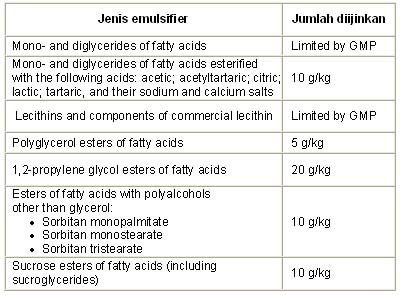
Modern margarines can be made from any of a wide variety of animal or vegetable fats, mixed with skimmed milk, salt, and emulsifiers. Like butter, margarine is about 80% fat, 20% water and solids, flavored, colored, and fortified with vitamin A, and sometimes D, to match butter's nutritional contribution to the human diet. The oil is pressed from seeds, purified, hydrogenated, and then fortified and colored, either with a synthetic carotene or annatto. The water phase is usually reconstituted, or skimmed milk, that is cultured with lactic acid bacteria to produce a stronger flavor. Emulsifiers such as lecithin help disperse the water phase evenly throughout the oil, and salt and preservatives are also commonly added. This oil and water emulsion is then heated, blended, and cooled. The softer tub margarines are made with less hydrogenated, more liquid, oils than block margarines.
Margarines made from vegetable oils are popular in today's market, as they are advertised as lower in saturated fat than butter, and claim to be a healthier option. These claims continue to be challenged.
Three main types of margarine are common:
Traditional margarines, which contain saturated fats, are mostly made from vegetable oils.
Blended margarines, high in mono- or polyunsaturated fats, which are made from safflower, sunflower, soybean, cottonseed, rapeseed, or olive oil.
Hard, generally uncolored margarine for cooking or baking. (Shortening)
Blending with butter
Many popular table spreads sold today are blends of margarine and butter or other milk products. Blending, which is used to improve the taste of margarine, was long illegal in countries such as the United States and Australia. Under European Union directives, a margarine product cannot be called "butter," even if most of it consists of natural butter. In some European countries butter-based table spreads and margarine products are marketed as "butter mixtures."
Butter mixtures now make up a significant portion of the table spread market. The brand "I Can't Believe It's Not Butter" spawned a variety of similarly named spreads that can now be found on supermarket shelves all over the world, with names like "Utterly Butterly," "You'd Butter Believe it," "Beautifully Butterfully," and "Butterlicious." These butter mixtures avoid the restrictions on labelling, with marketing techniques that imply a strong similarity to real butter. Such marketable names present the product to consumers differently from the required product labels that call margarine "partially hydrogenated vegetable oil."Market acceptance
Margarine, particularly polyunsaturated margarine, has become a major part of the Western diet and overtook butter in popularity in the mid-20th century. In the United States, for example, in 1930 the average person ate over 18 pounds (8.2 kg) of butter a year and just over 2 pounds (0.91 kg) of margarine. By the end of the 20th century, an average American ate around 5 lb (2.3 kg) of butter and nearly 8 lb (3.6 kg) of margarine.
The United States imports 10,000,000,000 pounds (4.5×10⁹ kg) and exports 2,000,000,000 lb (910,000,000 kg) of margarine annually.
Margarine has a particular market to those who observe the Jewish dietary laws of Kashrut. Kashrut forbids the mixing of meat and dairy products, and hence there are strictly Koshernon-dairy margarines available. These are often used by the Kosher consumer to adapt recipes that use meat and butter, or in baked goods that will be served with meat meals. The 2008 Passover margarine shortage caused much consternation within the Kosher-observant community.
Margarine that doesn't contain dairy products can also provide a vegan substitute for butter.
Nutrition
Discussions concerning the nutritional value of margarines and spreads revolve around two aspects --- the total amount of fat, and the types of fat (saturated fat, trans fat). Usually, a comparison between margarine and butter is included in this context as well.
Amount of fat
Fat is an essential part of nutrition as it is needed in the production of cell membranes and several hormone-like compounds called eicosanoids. In addition, fat acts as carrier for fat-soluble vitamins A, D, E and K. The roles of butter and traditional margarine (80% fat) are similar with respect to their energy content, but low-fat margarines and spreads are also widely available.
Saturated fat
Vegetable fats can contain anything between 7% and 86% saturated fatty acids. Liquid oils (unhardened canola oil, sunflower oil) tend to be on the low end, while tropical oils (coconut oil, palm kernel oil) and fully hardened (hydrogenated) oils are at the high end of the scale. A margarine blend is a mixture of both types of components, and will rarely exceed 50% saturated fats. Exceptions are some traditional kitchen margarines or products that have to maintain stability under tropical conditions. Generally, firmer margarines contain more saturated fat.
Regular butterfat contains about 65% saturated fats, although this varies somewhat with season. One tablespoon of butter contains over 7g of saturated fat.
Unsaturated fat
Consumption of unsaturated fatty acids has been found to decrease LDL cholesterol levels and increase HDL cholesterol levels in the blood, thus reducing the risk of contracting cardiovascular diseases.
There are two types of unsaturated oils: mono- and poly-unsaturated fats both of which are recognized as beneficial to health in contrast to saturated fats. Some widely grown vegetable oils, such as rapeseed (and its variant canola), sunflower, safflower, and olive oils contain high amounts of unsaturated fats. During the manufacture of margarine, some of the unsaturated fats may be converted into saturated fats or trans fats in order to give them a higher melting point so that they are solid at room temperatures.
Omega-3 fatty acids : Omega-3 fatty acids are a family of polyunsaturated fatty acids, which have been found especially good for health. This is one of the two Essential fatty acids, so called because humans cannot manufacture it and must get it from food. Most modern Western diets are severely deficient in it. Omega-3 fatty acids are mostly obtained from oily fish caught in high-latitude waters. They are comparatively uncommon in vegetable sources, including margarine. However, one type of Omega-3 fatty acid, alpha-lineloic acid (ALA) can be found in some vegetable oils. Flax oil contains 30-50% of ALA, and is becoming a popular dietary supplement to rival fish oils; both are often added to premium margarines. An ancient oil plant, camelina sativa, has recently gained popularity because of its high Omega-3 content (30-45%), and it has been added to some margarines. Hemp oil contains about 20% ALA. Small amounts of ALA are found in vegetable oils such as soybean oil (7%), rapeseed oil (7%) and wheat germ oil (5%).
Omega-6 fatty acids : Omega-6 fatty acids are also important for health. They include the essential fatty acid linoleic acid (LA), which is abundant in vegetable oils grown in temperate climates. Some, such as hemp (60%) and the common margarine oils corn (60%), cottonseed (50%) and sunflower (50%), have large amounts, but most temperate oil seeds have over 10% LA. Margarine is very high in omega-6 fatty acids. Modern Western diets are frequently quite high in Omega-6 but very deficient in Omega-3. The omega-6 to omega-3 ratio is typically 10:1 to 30:1. Large amounts of omega-6 decreases the effect of omega-3. Therefore it is recommended that the ratio in the diet should be less than 4:1, although optimal ratio may be closer to 1:1.
Trans fat
Unlike other dietary fats, trans fatty acids are not essential and provide no known benefit to human health. As with saturated fatty acids, there is a positive linear trend between trans fatty acid intake and LDL cholesterol concentration, and therefore increased risk of coronary heart disease, by raising levels of LDL cholesterol and lowering levels of HDL cholesterol. Because partially hydrogenated oils contain more trans bonds than do natural oils, they are generally considered to be more harmful.
Several large studies have indicated a link between consumption of high amounts of trans fat and coronary heart disease, and possibly some other diseases, prompting a number of government health agencies across the world to recommended that the intake of trans-fats be minimized.
In the US, partial hydrogenation is common as a result of preference for homegrown oils. However, since the mid-1990s, many countries around the world had started to move away from using partially hydrogenated oils. This led to the production of new margarine varieties that contain less or no trans fat.
Since 2003, food manufacturers in the US label their products (following government regulations) as "0g" trans-fat, which effectively means less than 500 mg trans-fat per serving; however, no fat is entirely free of trans fats. For example, natural butterfat contains 2-5% trans-fatty acids (mainly trans-vaccenic acid, a variant of the normal vaccenic acid). However, the naturally occurring trans-fatty acids rumenic acid and trans-vaccenic acid (trans-vaccenic acid is used by the human body to make rumenic acid show anticarcinogenic properties, and thus appear, quite opposite to the artificially created trans-fatty acids.
Note that US and Canadian regulation of margarine contents are not the same, so the US regulatory actions may not have taken place in Canada or may have taken place in a different form.
Cholesterols
Excessive cholesterol is a health risk because fatty deposits gradually clog up the arteries. This will cause blood flow to the brain, heart, kidneys and other parts of the body to become less efficient. Cholesterol, though needed metabolically, is not essential in the diet. The human body makes cholesterol in the liver, producing about 1g of cholesterol each day or 80% of the needed total body cholesterol. The remaining 20% comes directly from food intake.
Therefore overall intake of cholesterol as food has less effect on blood cholesterol levels than the type of fat eaten. However, some individuals are more responsive to dietary cholesterol than others. The U.S. Food and Drug Administration states that healthy people should not consume more than 300 mg of cholesterol each day.
Plant sterol/stanol esters
Plant sterol esters or plant stanol esters have been added to some margarines and spreads because of their cholesterol lowering effect.
Several studies have indicated that consumption of about 2 grams per day provides a reduction in LDL cholesterol of about 10%. Sterol/stanol esters are tasteless and odorless, and have the same physical and chemical properties as most fats. However, they do not enter the blood stream but instead pass through the gut which makes a low-fat margarine spread a good vehicle for the delivery of sterol/stanol esters.
Margarine today
European Union
Under European Union directives, margarine is defined as:
A water-in-oil emulsion derived from vegetable/animal fats, with a fat content of at least 80% but less than 90%, that remain solid at a temperature of 20°C and are suitable as spread.
Margarines may not have a milk fat content of more than 3%. For blends and blended spreads, the milk fat may be between 10% and 80%.
Spread that contains 60 to 62% of fat may be called "Three-quarter-fat margarine" or "reduced-fat margarine". Spread that contains 39 to 41% of fat may be called "half-fat margarine", "low-fat margarine" or "light margarine". Spreads with any other percentage of fat are called "fat spread" or "light spread". Many Member States currently require the mandatory addition of vitamins A and D to margarine and fat spreads for reasons of public health. Voluntary fortification of margarine with vitamins had been practiced by manufacturers since 1925, but in 1940 with the advent of the war, certain Governments’ took action to safeguard the nutritional status of their nation by making the addition of vitamin A and D compulsory. This mandatory fortification was justified in the view that margarine was being used to replace butter in the diet.
United Kingdom
In the United Kingdom there are no brands of spread on sale which contain any partially hydrogenated oils. Although fortification with Vitamin A & D is still mandatory for margarine, it is only a voluntary requirement for other spreads.
Canada
Canadian standard B.09.016 states that margarine shall be:
A plastic or fluid emulsion of fat, or water in fat, oil, or fat and oil that are not derived from milk and shall contain not less than 80% fat and not less than 3300 IU of vitamin A and 530 IU of vitamin D.
Calorie reduced margarine is specified in standard B.09.017 as:
Containing not less than 40% fat and having 50% of the calories normally present in margarine
Australia
Margarine is common in Australian supermarkets. Sales of the product have decreased in recent years due to consumers "reducing their use of spreads in their daily diet". It was not legal to sell colored margarine in Australia until the 1960s.
The product's availability in New Zealand has historically paralleled that of Australia.