Showing posts with label Propolis. Show all posts

Sunday, May 22, 2011

Propolis: the Chemical Composition

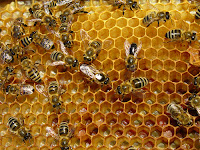
The chemical composition of propolis varies from hive to hive, district, and from season to season. It is usually dark brown but can be found in shades of green, red, black and white, depending on the source of the resin in the particular area of ​​the hive.

The bees are opportunists, picking what they need from available sources, and a detailed analysis shows that the chemical composition of propolis varies considerably from one region to another, with the vegetation. In northern climates, for example, bees collect resins from trees such as poplars and conifers (the biological role of the resin of trees is to heal the wounds and defend against bacteria, fungi and insects).

Poplar is a resin rich in flavonoids. "Typical" northern temperate propolis has approximately 50 constituents, primarily resins and vegetable balsams (50%), waxes (30%), essential oils (10%) and pollen (5%).

In the neotropics, as well as a variety of trees, bees may also collect the resin from the flowers of the genera Clusia and Dalechampia, which is the type of plants are known to produce resins of flowers to attract pollinators. Clusia resin containing benzophenone polyprenylated.

In some areas, the Chilean propolis contains viscidone, Baccharisshrubs terpene away, and Brazil, naphthoquinone epoxide recently isolated from propolis red and prenylated acids, such as 4-hydroxy-3 ,5-cinnamic acid diprenyl have been documented.

Analysis of propolis undertaken in Henan, China found sinapic acid, isoferulic acid, caffeic acidand Chrysin, where the first three compounds have shown antibacterial properties .. In addition, the Brazilian Red Propolis (primarily resin plant Dalbergia ecastaphyllum) is a large number of isoflavonoids 3-hydroxy-8-0.9 and medicarpin dimethoxypterocarpan.

Sometimes even bees collect different caulks man-made, when the usual sources are more difficult to achieve. The properties of propolis depend exact sources used by each hive, and therefore have medicinal properties that may be present in a hive with propolis may be absent from the other, and the distributors of propolis can control these factors. This may be the cause of multiple and varied demands for their medicinal properties, and the difficulty of repeating the allegations of scientific studies.

The propolis taken a colony can vary, so in controlled clinical trials difficult, and the results of any search can not be reliably generalized to Propolis samples from other regions.

Related Posts:

Saturday, May 21, 2011

Trigona sp. the Producer of Propolis

Trigona_sp
Trigona sp., commonly called Sugarbag bee, Stingless bee, Sweat bee or Meliponini are a large group of bees, including Meliponini tribe (or subtribe Meliponini by other authors). Belong to the family Apidae, and closely related to common bees, carpenter bees, bumble and orchid bees. The common name is somewhat misleading, since many other species of bees, especially in the family Andrenidae, are not capable of stinging, like all the male bees. Trigona sp have stingers, but they are very small and can be used for defense.

Fewer Trigona sp can be found in most tropical and subtropical world, including Australia, Africa, Southeast Asia and tropical America. Most eusocial native bees to Central and South America are Trigona sp, very few of them produce honey on a scale so that they are raised by humans. They are also very different in Africa, including Madagascar and are raised there too; Honey produced by Trigona sp is considered medicine in many African societies, as well as in South America.

Being tropical Trigona sp. are active throughout the year, but are less active in cooler weather, with some species diapause. Unlike other eusocial bees, which do not sting, but to defend by biting if their nest is disturbed. In addition, some (Oxytrigona gender) were the mandibular secretions that causes painful blisters. Despite its lack of bite, Trigona sp. are eusocial, may have very large colonies made formidable by the number of defenders.

Fewer Trigona sp. usually nest in hollow tree trunks, branches, underground cavities or rock crevices, but they have also been encountered in the cavities of walls, trash old water meters and storage drums. Many beekeepers keep bees in their hive original log or transfer them to a wooden box, making it easier to manage the hive.

The Trigona sp.store pollen and honey in large egg-shaped pots of beeswax, usually mixed with different types of resin of the plant (sometimes called "propolis"). These vessels have been organized around a core set of horizontal farming, where the larvae of Trigona sp. are found. When the young worker Trigona sp. leave their cells, which tend to remain inside the hive, performing different jobs. From the age of the workers become savers or fodder. Different from the honey bee' larvae, the larvae of Trigona sp. do not feed directly. The pollen and nectar are placed in a cell, an egg, and the cell is sealed until the adult Trigona sp. emerges after pupation (mass provisioning). At any time, hives can contain 300 to around 80,000, depending on the species.

Related Posts: